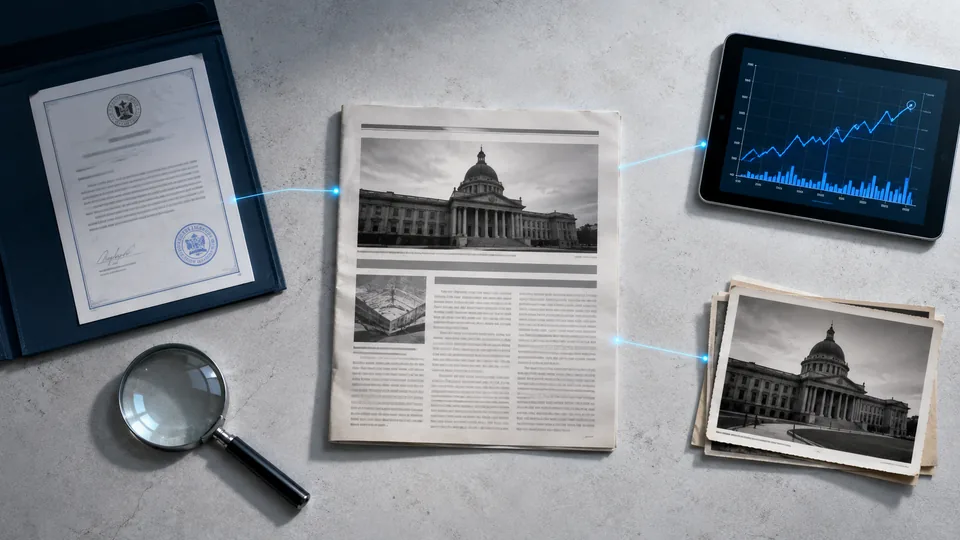
Deepfakes: how to recognize signals and verify audio and video
How to assess a possible deepfake using the source, full recording, audio and context while accounting for the limits of AI detectors.
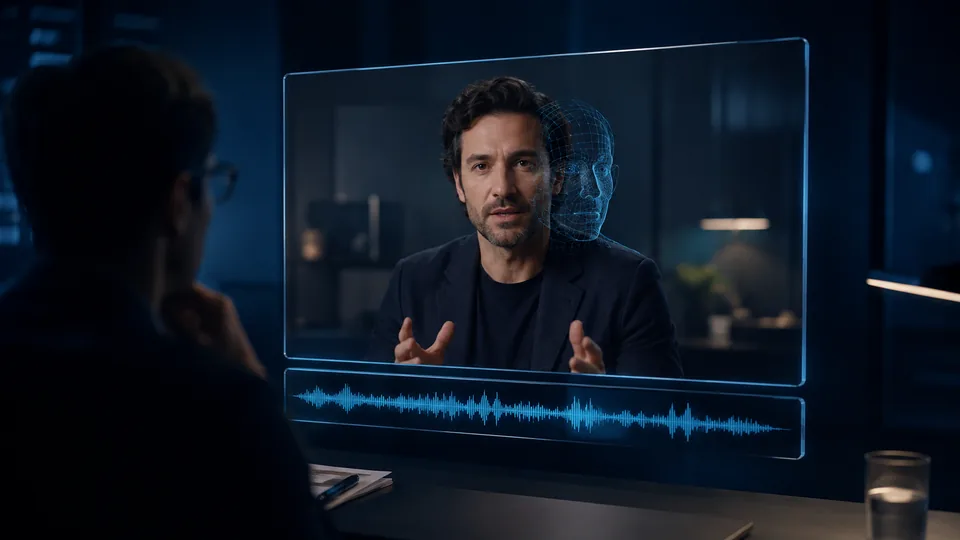
To recognize a possible deepfake, looking for a strange face or unnatural voice is not enough. You need a check that combines the source, full recording, context, and supporting evidence. An anomaly may justify further investigation; its absence does not prove the content is authentic.
This guide covers the assessment of suspicious images, audio, and video. It does not offer an infallible detector or claim that Secure Content Engine can automatically determine whether every piece of content was generated with AI.
What a deepfake is, and what it is not
The term commonly describes synthetic or manipulated content created with artificial intelligence techniques, for example making a person appear to say or do something they did not say or do. Not every use of AI is deceptive: disclosed dubbing, creative effects, and fictional scenes have different contexts.
A misleading video may also contain no deepfake at all. A cut that omits a qualification, audio paired with different images, or an incorrect translation can change a recording's meaning without AI generation.
The initial question should therefore be “does this recording support the claim?” rather than only “can I see AI artifacts?” The guide to images taken out of context explores cases where the description rather than the file's production is the problem.
Why visual signals do not give a verdict
Discontinuities in movement, unusual edges, or misalignment between speech and lips may suggest looking for a better copy. But a version received in a chat cannot reveal the cause of the defect automatically: compression, editing, or playback issues may be responsible.
Avoid rigid lists claiming that a single detail always distinguishes real people from synthetic ones. Errors change across techniques and versions, while some authentic recordings are low quality. Describe a visual impression as such and connect it to a follow-up check.
Do not accuse someone of creating a fake based on these observations. Even establishing that content was manipulated does not automatically identify who manipulated it or first distributed it.
A working process for suspicious audio and video
Keep the reference you received and write down the exact statement attributed to the subject. Then work through questions without modifying the copy you use as your reference.
- Where did it come from? Distinguish the channel you viewed from the source said to have made the recording.
- Is there a full version? Look for the context before and after the clip, including the question and answer.
- Does the subject confirm the content? Look for a reference reached independently from the suspicious message.
- Do other recordings document the same episode? Compare genuinely shared elements without confusing similar events.
- Do the audio, images, and text say the same thing? Check whether the conclusion depends mainly on an added subtitle.
- What remains uncertain? Record the limitation before sharing a conclusion.
This is a proposed editorial procedure, not forensic certification. When the stakes require specialist analysis, preserve the collected documentation and consult professionals familiar with the format and type of manipulation.
How to read an AI detector result
NIST AI 100-4 examines detection, labeling, and provenance of synthetic content. It explains that detector performance depends on evaluation conditions and content characteristics, with possible false positives and false negatives.
Before using a result, ask which format the tool analyzes, which transformations were applied to the file, and what the returned score means. A numeric value should not automatically become the probability that the news is false: the tool may classify a property different from the claim you are checking.
If two tools disagree, do not simply average their scores. Record the results as signals and return to the sources. For private material, check whether the service requires uploading the file and whether you are authorized to do so; do not distribute sensitive recordings merely to test a detector.
Example: a message attributed to an organizer
Suppose, in a fictional case, that you receive audio in which a voice resembling an event organizer moves the entrance. The message tells people to ignore their ticket and follow a new link.
You do not need to prove technically that the voice is synthetic before deciding not to rely on the message. Contact the organization through previously verified details and ask it to confirm the change. Keep two outcomes separate: “the instructions are unconfirmed” and “the audio is a deepfake.” The first can be established without resolving the second.
If you manage the event, publish the correct information through the official channel and say where updates can be checked. You do not need to reproduce the suspicious audio in full to make the notice useful.
What Content Credentials add
C2PA credentials can accompany claims about the creation or modification process in supported formats and workflows. Check their availability in the actual file; seeing a symbol reproduced in an image is not enough.
Synthetic content can have valid credentials. Conversely, a real recording may have none. For publishers of AI material, the guide to declaring origin and modifications explains how to avoid presenting a signature as proof of a real event.
Frequently asked questions
Does a familiar voice prove who is speaking?
Do not treat it alone as sufficient identity verification for unusual instructions. Seek confirmation through a known channel independent of the message you received.
Is a video without obvious defects authentic?
You cannot conclude that from appearance. Find the source and complete recording, then check whether the context supports the claim.
Does C2PA replace a deepfake detector?
No. Provenance and detection answer different questions. For a broader check, start with source verification and use each tool only within its scope.
Sources and further reading
Technical and editorial references consulted for this guide. Examples are illustrative and do not document real cases or specific integrations.